Digital sovereignty: what a sovereign cloud really changes
Digital sovereignty and sovereign cloud: why data location is no defence against the CLOUD Act, what French law already requires, the arguments on both sides and a method to decide where to host your data.
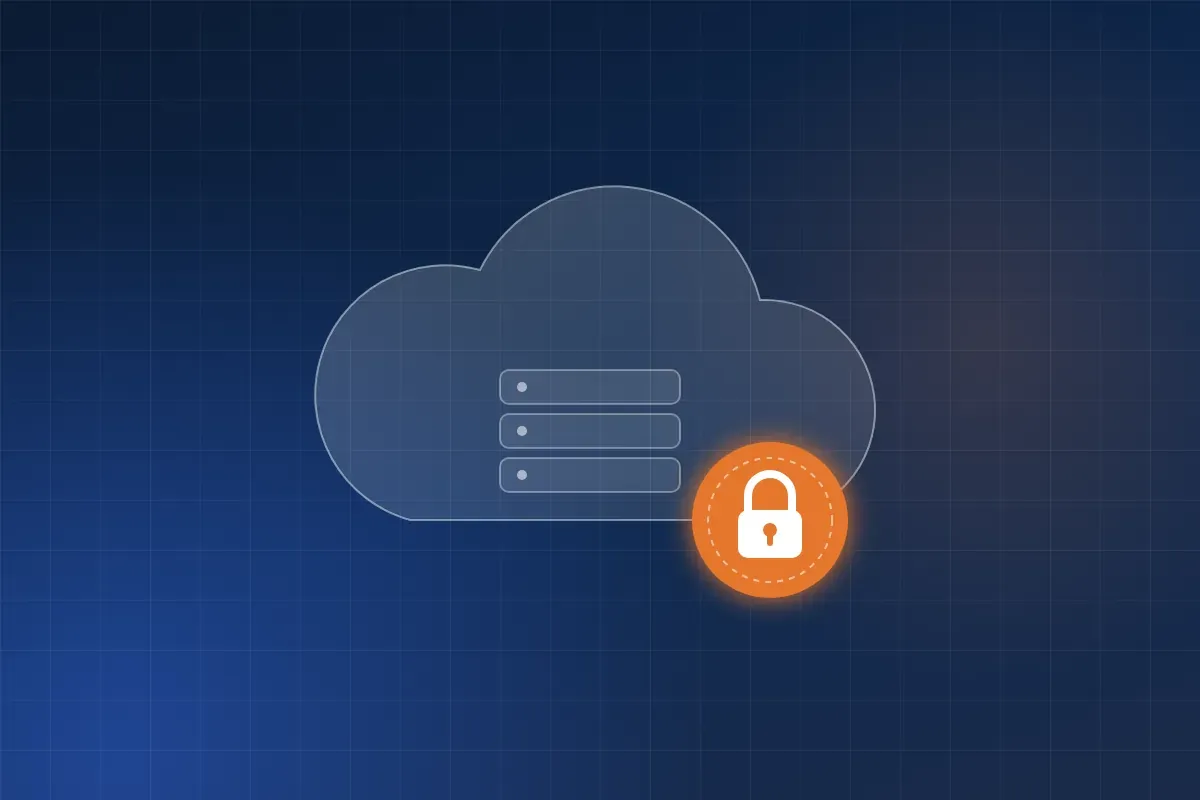
Digital sovereignty is the ability to keep control of your data and systems without depending on decisions made outside your own legal framework. In France, the debate centres on the sovereign cloud: should sensitive data be hosted by a qualified European operator, or is a European data centre run by a US hyperscaler enough? The answer comes down to one idea, which this article unpacks: storage location does not protect you, the provider's jurisdiction does. For the details of ANSSI's qualification, see our article on SecNumCloud.
Why digital sovereignty is debated in France
On 10 June 2025, before the French Senate's inquiry into public procurement, the rapporteur asked Microsoft France's director of public and legal affairs whether he could guarantee that public sector data bought through UGAP, the State purchasing agency, would never be passed to US authorities without French consent. The answer: "No, I cannot guarantee it", adding that it had never happened so far. That answer sums up the debate: a contractual commitment does not bind another country's authorities.
A few months later, on 31 October 2025, the Cour des comptes (the French national audit office) published a report on the sovereignty of the State's civilian information systems. It notes the opacity of how US laws (the CLOUD Act and FISA Section 702) are applied, finds that the July 2021 "cloud first" doctrine was weakened in practice, that the ministerial clouds (Nubo and Pi) remain little used, and cites the hosting of the Health Data Hub on Microsoft Azure. For the Court, control of sensitive data is the route to sovereignty.
The issue is not limited to the State. Local authorities, hospitals, manufacturers and regulated companies ask the same question at every contract renewal: which data can be entrusted to which provider?
Data location versus jurisdiction: the confusion to avoid
Many offers highlight "data hosted in France". That helps, but it does not answer the question of access by a foreign authority. The CLOUD Act, passed by the US Congress in 2018, requires providers subject to US law to preserve and disclose data "within such provider's possession, custody, or control", whether that data is located inside or outside the United States. A European subsidiary or a data centre in Paris changes nothing if the parent company can be compelled.
Two other confusions come up often:
- GDPR transfers versus extraterritorial access: the EU–US Data Privacy Framework, upheld by the EU General Court on 3 September 2025, governs transfers of personal data. It does not make a US provider immune to requests from its own authorities, and it does not cover your non-personal data, such as trade secrets.
- Encryption: it reduces the risk, provided the provider has no access to the keys. If the service must decrypt data to process it, protection once again depends on the operator's jurisdiction.

What is a sovereign cloud?
No law defines a "sovereign cloud". The term covers very different offers, which can be ranked by what they actually guarantee:
| Hosting | Where data sits | Exposure to extraterritorial laws | Good fit |
|---|---|---|---|
| Non-European provider, EU region | In Europe | Yes: the parent company can be compelled | Low-sensitivity data, advanced service needs |
| Non-qualified European provider | In Europe | Low, but immunity not independently checked | Everyday internal data |
| SecNumCloud-qualified offer | In the European Union | Protected by immunity criteria checked by ANSSI | Sensitive data, State obligations |
| In-house hosting (on-premise) | On your premises | No provider to compel | The most sensitive data, if you can secure it |
In France, the only third-party-verified guarantee is the SecNumCloud qualification. ANSSI presents it as a way to protect sensitive data both from cybercrime and from the application of extraterritorial laws. At European level, the EUCS certification scheme, under discussion since 2020, was meant to play this role: its sovereignty criteria were dropped from the draft in 2024. Without a common European criterion, it is up to states such as France to set their own requirements.
What French law already requires
For the State: the SREN law and the April 2026 decree
Article 31 of the law of 21 May 2024 to secure and regulate the digital space (the SREN law) set the principle. Its implementing decree, Decree No. 2026-272 of 14 April 2026, and an order issued the same day made it operational. According to the technical note from the French Ministry of Economy's legal department published on 6 May 2026:
- State administrations, their agencies and public interest groupings that entrust particularly sensitive data to a private cloud must use a SecNumCloud-qualified offer, which protects it from access by third-country authorities not authorised by EU law;
- a temporary exemption is possible when no suitable offer exists;
- model clauses (security, reversibility, sovereignty) are provided to buyers.
Local authorities are not covered by this decree, but they can draw on it in their tenders.
For healthcare: HDS, and maybe more
Health data falls under the HDS certification, which does not currently include equivalent immunity criteria. The Cour des comptes recommends aligning the HDS framework with SecNumCloud requirements, which would make sovereignty an issue for every health data host.
For companies: no general obligation
NIS 2 does not require a sovereign cloud. It does require managing supply chain risks, which includes choosing hosting providers (see our article on NIS 2 and DORA requirements for third parties). The risk of access by a foreign authority is one of the risks to assess, alongside availability and reversibility.
The arguments on both sides
For a sovereign cloud
- Verifiable protection: SecNumCloud qualification is checked by ANSSI, whereas a contractual promise from a provider subject to foreign law does not bind that country's authorities.
- Less dependency: the Cour des comptes highlights the risk of technological dependency and recommends setting a timetable in 2026 for sovereign office tools, and bringing the ministerial clouds together.
- A lever for the ecosystem: public procurement shapes the market. Without customers, European offers cannot close their functional gap.
The limits
- Cost and catalogue: qualified offers often provide fewer advanced services (AI, data analytics) and may cost more, hence the exemption in the decree.
- Sovereignty is not security: ANSSI points out that qualifying a provider does not prejudge the security of the client's information system. A misconfigured application on a qualified cloud is still vulnerable.
- Cloud is only one layer: email, office software, business applications and AI tools raise the same question. Hosting servers in France while storing documents in a US office suite only solves part of the problem.
Digital sovereignty: deciding for your own data
Rather than settling the debate in the abstract, treat it as a risk decision, data set by data set:
- Classify your data: assess its sensitivity in terms of availability, integrity, confidentiality and traceability (the DICP method), and flag what falls under an obligation (State data, health, trade secrets, classified data).
- Assess the legal risk: include access by a foreign authority in your risk analysis, with its likelihood and severity, alongside technical threats. This is what justifies, or not, the extra cost of a qualified offer.
- Question your suppliers: in your vendor security questionnaire, ask for the parent company's nationality and ownership structure, where data is stored and administered, the list of subcontractors, certifications (SecNumCloud, HDS, ISO 27001) and the policy for answering authority requests. This is the core of third-party risk management.
- Contract your exit: provide for reversibility (formats, deadlines, support) in the contract or the security assurance plan. Sovereignty without the ability to leave is not sovereignty.
How Phinasoft helps
Phinasoft is a governance, risk and compliance platform developed in France. It helps you apply this approach, and it meets your own sovereignty requirements:
- the hosting of your choice: SaaS on a French sovereign cloud (OVH or Outscale) with an optional SecNumCloud setup, SaaS on AWS in European data centres, or on-premise installation on your own infrastructure;
- the risk analysis module, which follows the EBIOS Risk Manager method or your own, to assess legal risk alongside the others and track measures;
- the vendor risk management module, which sends suppliers questionnaires built from your frameworks, including SecNumCloud, then scores answers and tracks action plans.
To see how to map your cloud providers' exposure on a real case, book a demo.
Summary
Location is not enough
The CLOUD Act requires a provider subject to US law to hand over data it controls, even when stored in Europe. Protection comes from the operator's jurisdiction, not the data centre's address.
French law has settled it for the State
Since the decree of 14 April 2026, particularly sensitive data held by French State administrations, their agencies and public interest groupings must go to a SecNumCloud-qualified offer, barring a temporary exemption.
For everyone else, a risk decision
Classify your data, assess the legal risk alongside other risks, question your suppliers and plan for reversibility: a sovereign cloud is justified for the data that warrants it, not as a principle.
Frequently asked questions
What is digital sovereignty?
Digital sovereignty is the ability of a state, or an organisation, to keep control of its data, systems and technology choices without depending on decisions made outside its legal framework. In practice, the debate is mostly about hosting sensitive data and about reliance on large non-European cloud and software providers.
What is a sovereign cloud?
There is no single legal definition. In France, the reference is ANSSI's SecNumCloud qualification: on top of security requirements, it sets immunity criteria against extraterritorial laws (provider headquartered and controlled in the European Union, limits on non-European ownership). An offer hosted in France by a provider subject to US law does not provide this guarantee.
Does the CLOUD Act apply to data stored in Europe?
Yes. The 2018 CLOUD Act requires providers subject to US law to disclose, at the request of US authorities, data in their possession, custody or control, whether that data is located in the United States or abroad. Storage location alone does not remove this risk.
Is a sovereign cloud mandatory?
For French State administrations, their agencies and public interest groupings, Article 31 of the SREN law and the decree of 14 April 2026 require SecNumCloud-qualified hosting for particularly sensitive data, with a temporary exemption when no suitable offer exists. For private companies, no general rule requires it; some sectors have their own rules, such as health data hosting.
Does SecNumCloud guarantee my data is secure?
Not on its own. ANSSI states that qualifying a provider does not prejudge the security of the client's information system. It guarantees the security level and immunity of the hosting service; configuration, access, backups and the management of your applications remain your responsibility.
How do I choose where to host my data?
Classify your data by sensitivity, include the risk of access by a foreign authority in your risk analysis, question your suppliers about their jurisdiction, ownership, subcontractors and certifications, then reserve qualified offers for the data that justifies them. In every case, include a reversibility clause.
Sources (8)
- Sénat — Commission d'enquête sur les coûts et les modalités effectifs de la commande publique, audition de Microsoft France, 10 juin 2025
- Cour des comptes — Les enjeux de souveraineté des systèmes d'information civils de l'État, 31 octobre 2025
- Le Monde Informatique — La Cour des comptes recadre la souveraineté numérique de l'État
- US Department of Justice — Texte du CLOUD Act (Clarifying Lawful Overseas Use of Data Act), 2018
- Direction des affaires juridiques (Bercy) — Fiche technique sur la mise en œuvre de l'article 31 de la loi SREN, décret n° 2026-272 et arrêté du 14 avril 2026, 6 mai 2026
- ANSSI — SecNumCloud pour les fournisseurs de services cloud
- Hogan Lovells — EUCS: controversial data sovereignty issues continue to drive debate, 12 juin 2024
- Le Club des juristes — Le Tribunal de l'Union européenne valide le Data Privacy Framework (affaire T-553/23, Latombe), septembre 2025
A platform and service that adapt to you
Our platform is designed for fine-tuned configuration and broad adaptability to your needs.