

What is a risk analysis?
A definition and explanation of risk analysis: objectives, methods, pitfalls to avoid…

A risk analysis is an approach which, within a given scope, enables you to understand your risks, prioritise them and adopt the right treatment plan.
Ebios RM, ISO 27005, Mehari… These names usually come up very quickly as soon as people start talking about cybersecurity risk analysis. Newcomers to the subject can easily be intimidated by the apparent technicality of these methodologies and conclude that risk analysis is clearly a matter for seasoned technicians, one they are unlikely to understand much of. No risk analysis is possible off these well-mapped paths!
Except that, over time, we lose sight of what risk analysis is really about and end up doing compliance with methods instead, even though those methods were designed as means, not ends. The complete opposite of what a risk analysis is supposed to be.
Before outlining what it is, let us first be clear about what risk analysis is not.
Risk analysis is not a search for vulnerabilities
No, a vulnerability scan report is not a risk analysis. People sometimes make the serious mistake of thinking that by listing a whole series of vulnerabilities, the job is done. Such a list may feed into a risk analysis, but it is neither its core nor an essential component (when I carry out an analysis on a project in its scoping phase, there are not yet any vulnerabilities in production).
What is the difference between a vulnerability and a risk?
- A vulnerability is a technical bug or an organisational flaw that causes or allows an unauthorised action, not intended in the normal operation of a system.
- A risk is an event that undermines the achievement of a system's objectives, potentially by exploiting a vulnerability in that system.
A vulnerability exists in its own right, whereas a risk always depends on one or more objectives. It is therefore highly contextual.
A lack of validation rules on form inputs, a weak password or the absence of two-factor authentication are vulnerabilities. But they do not necessarily lead to risks. Not requiring two-factor authentication for a user to access a standard online newspaper is rarely a risk for the organisation. Nor is an SQL injection systematically a risk: in fact, many of those identified in penetration tests have absolutely no impact on the proper functioning of the application.
A risk, for example, is: “Inability to pay employees' salaries” or “Massive leak of the personal data in the charity's donor database”. The language is not technical: it is business-oriented and crystal clear to any member of the organisation, especially senior management.
If a vulnerability does not clearly enable, with reasonable probability, a scenario with a significant impact on the organisation, then it is not a risk, or at most a negligible risk that is not worth mentioning in a risk analysis. It makes little difference to us that a vulnerability allows data to be extracted from a database if that data is public anyway!
Risk analysis is not a compliance exercise
A compliance analysis is a binary exercise: you take a list of questions or checkpoints and ask whether the subject of the study is compliant or not. It is fairly simple and mechanical. The main difficulty is that it can be tedious, depending on the size and complexity of the scope and the amount of evidence to gather.
The risk-based approach, on the other hand, requires genuine reflection and a real grasp of the context. Just as a vulnerability does not necessarily represent a risk, non-compliance with a point in a standard or in any question grid may have no impact for one organisation but a severe impact for another. Compliance questionnaires are, moreover, often based on potential vulnerabilities.
However, a compliance approach can be relevant as a preliminary step in a risk analysis: in that case, the selected requirements form a baseline covering risks deemed common to all the scopes within the organisation that may be subject to this risk analysis.
Paradoxically, you can lose the spirit of a risk analysis by trying to comply strictly with a given method at the expense of the relevance of the analysis. It is an all-too-common mistake: starting from a recognised methodology (Ebios RM, ISO 27005…) and paying more attention to ticking off the method's various steps than to really doing the work of stepping back, even if that means adapting the method to the context.
Risk analysis is a genuine time for reflection that can neither be fully automated nor reduced to a list of binary questions
The quality of a risk analysis depends heavily on:
- a clear definition of the scope;
- a very good understanding of the context, the objectives of the stakeholders and the processes within that scope.
This is what then guides the whole study: you are not searching blindly for vulnerabilities but rather for feared events that could prevent certain objectives from being achieved. It is these feared events that will then make it possible to prioritise the vulnerabilities to be addressed.
- Objectives
- Stakeholders
- Processes
- PREVENTS AN OBJECTIVE Inability to pay employees' salaries
- PREVENTS AN OBJECTIVE Massive leak of donors' personal data
- VULN. 04 TO ADDRESS
- VULN. 02 TO ADDRESS
- VULN. 01
- VULN. 03
- VULN. 05
- VULN. 06
A risk analysis should produce, at the very least, the following:
- a list of feared events / risks (not vulnerabilities);
- ratings of these risks, making it possible to rank them against one another in terms of their importance to the organisation;
- a treatment plan for these risks, with genuine prioritisation based on the ratings established.
The list of any vulnerabilities that could allow the identified risks to materialise is relevant mainly for determining the right measures to put in place. But it will not necessarily interest the business decision-maker reviewing the results of the analysis.
Any approach or study that produces these elements constitutes a risk analysis. So you do not have to follow Ebios RM to the letter to carry out a risk analysis.
In fact, a simple brainstorming session can already constitute a risk analysis. What matters is asking these questions:
- What events do I fear for the achievement of the objectives of this system and/or my organisation, regardless of any technical consideration?
- What countermeasures should be put in place to reduce the likelihood and/or impact of these events? (which also means asking how the identified risks could actually materialise, and therefore which vulnerabilities could be exploited)
- By what criteria should they be prioritised?
Well-known methods are nothing more than attempts to establish a more or less precise approach that serves as a guide in answering these questions. They are certainly valuable for saving time and providing inspiration for the methodologies you will put in place in your organisation!
But from there, everyone should be free to adapt these methods, or even create their own method suited to their context! The key is not to lose sight of the objective:
- identifying major risks that make sense to the business, to make communication with it easier and ensure the value of my risk analysis;
- establishing a treatment plan consistent with the context (objectives, budget constraints, regulations, corporate culture, etc.).
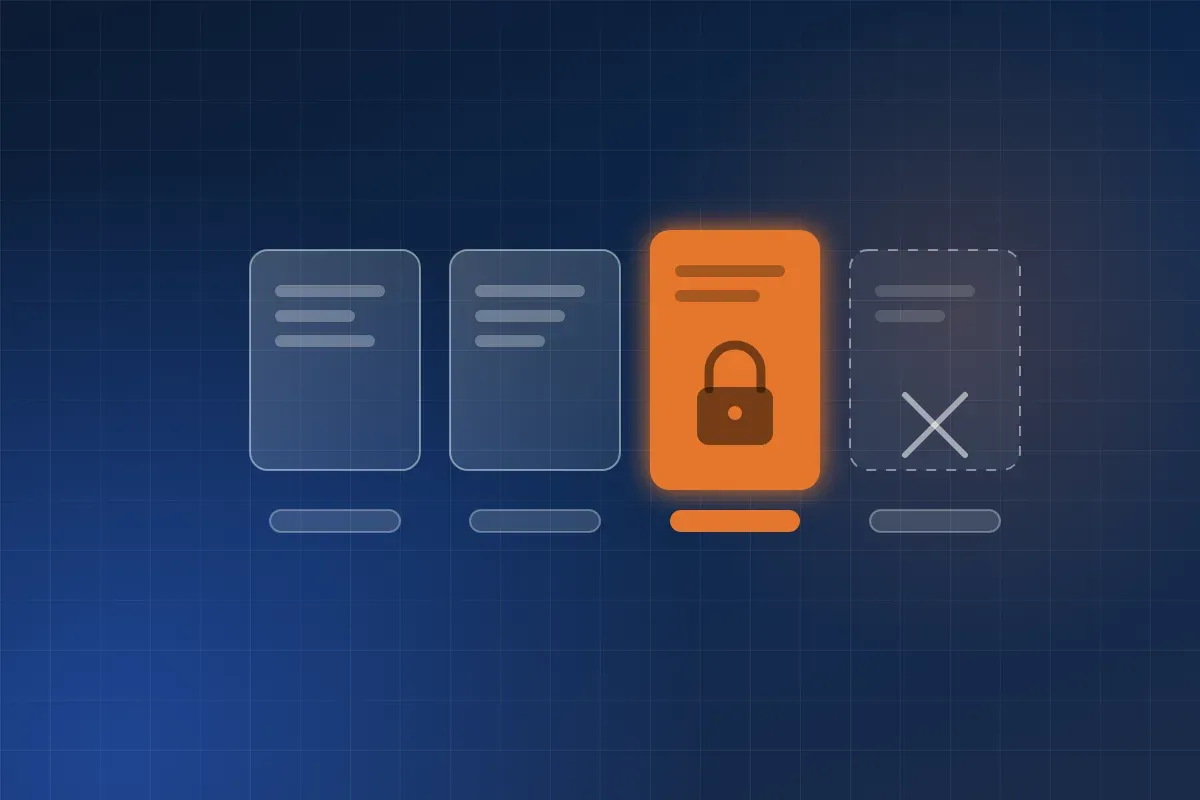
So no: “Doing a risk analysis” is not necessarily synonymous with “Doing an Ebios”. The Ebios RM method will, for example, be entirely suitable for a security accreditation in a context subject to strong regulatory constraints. On the other hand, in an organisation where the risk management culture is still emerging and which wants to introduce a quick risk analysis methodology for projects, applying the Ebios RM method could discourage project teams from building security in. Adaptations of Ebios RM or the definition of an ad hoc method are then called for.
CONTEXT A security accreditation, in a context subject to strong regulatory constraints.
CONTEXT A risk management culture that is still emerging, and a quick risk analysis methodology wanted for projects.
That is why, at Phinasoft, we take a resolutely pragmatic and contextual approach to risk analysis, one that is not limited to applying rigid methodological grids: we help you put in place an approach that is truly appropriate and, above all, useful for your context. Sometimes Ebios RM will be what you need, sometimes an adapted version, sometimes something completely different.
Summary
A cybersecurity risk analysis is a collaborative approach involving business and technical stakeholders, supported by security experts.
It relies on a risk analysis methodology designed to help those involved to:
- 01
Define the scope of the study
- 02
Identify feared events for the business
- 03
Identify the threats and vulnerabilities that could allow these events to occur
- 04
On that basis, rank risk scenarios according to their level of impact and likelihood
- 05
Determine a set of countermeasures to reduce the likelihood of these scenarios occurring, or even their impact
- 06
Give the business owner responsible for the scope the means to make the best possible risk management decisions
This methodology may follow market standards (Ebios RM, Mehari, NIST SP 800-30 and 39…), draw freely on them or be defined ad hoc according to the need.
A risk analysis is not a list of vulnerabilities, nor an assessment of compliance with requirements defined independently of the context.
To choose the best methodology for your context and a suitable tool, you can turn to Phinasoft's specialist services on the subject!
A platform and service that adapt to you
Our platform is designed for fine-tuned configuration and broad adaptability to your needs.