
Cyber insurance: what it covers, what it costs and how to buy the right cover
Cyber insurance covers part of the cost of a cyberattack. What it covers, what it costs in 2026, France's 72-hour complaint rule and how to buy the right cover.
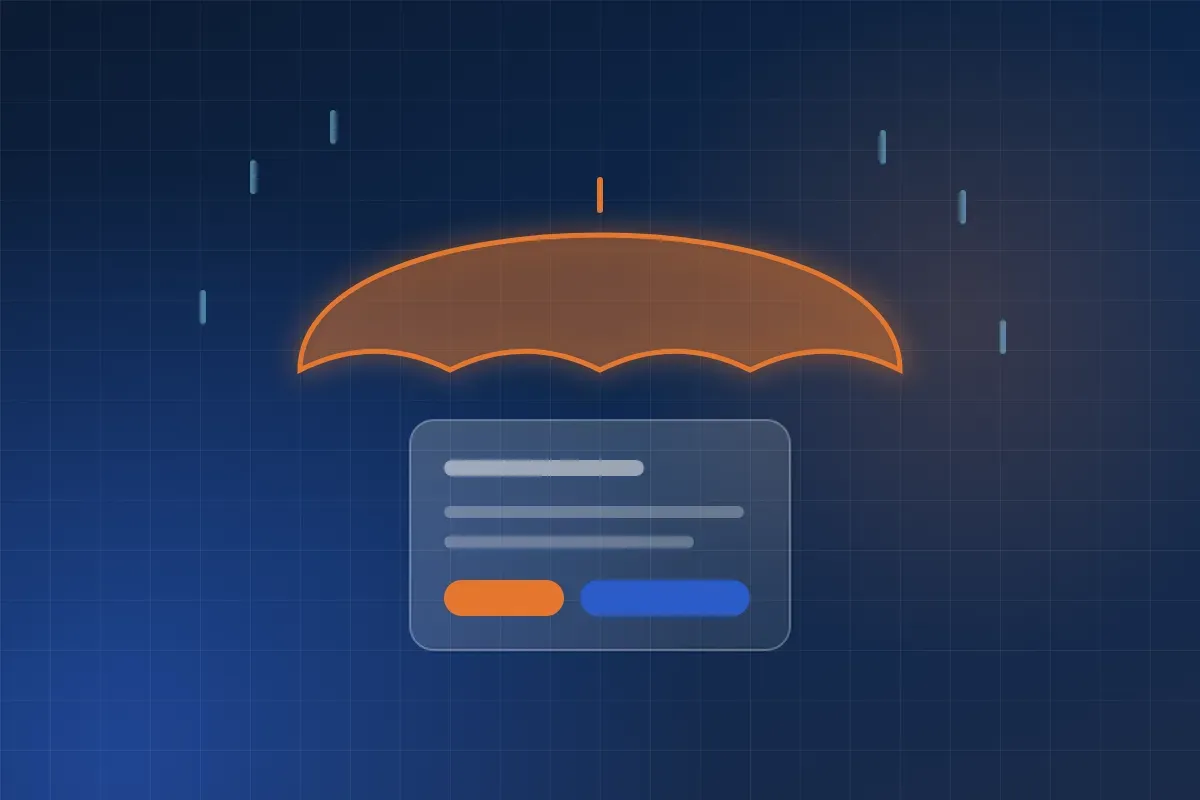
Cyber insurance is a policy that covers part of the cost of a cyberattack: crisis management, restoring systems, business interruption losses, liability towards third parties. In 2026 it is cheaper than two years ago in France, but it only pays what exceeds the deductible, up to a limit, and only if the company filed a police complaint within 72 hours. Here is what it covers, what it costs, what it does not do, and how to choose the right level of cover from your risk analysis.
Cyber insurance: definition and cover
In risk management, insurance is a way to transfer part of a risk to a third party, alongside reduction (security measures), acceptance and avoidance. It is one of the treatment options in ISO 27005. It applies to residual risk, what remains once measures are in place.
Cyber insurance policies usually combine several families of cover, with details that vary widely between insurers:
- Incident response costs: forensic investigation, legal advice, crisis communication, notifying affected people. Most policies include round-the-clock assistance.
- First-party losses: restoring systems and data, business interruption during downtime, sometimes extra costs to keep operating.
- Liability: claims from customers, partners or people whose data leaked, and defence costs.
On the other hand, the French Treasury's 2022 report on cyber risk insurance recommended a general principle that administrative penalties are uninsurable: do not count on your policy to pay a data protection fine.
The French cyber insurance market in 2026
The LUCY 2026 study by AMRAE, the French association of risk and insurance managers, gives the most complete picture of the French market. It draws on nearly 21,000 policies supplied by brokers and one insurer, excluding the public sector. Its main findings for 2025:
- Falling prices. Premiums reach about €306 million, down from €317 million in 2024 and €328 million in 2023. The average rate falls by 32% for large companies, the steepest drop ever seen in this market, and by 23% for mid-sized companies.
- More companies insured. 2,002 mid-sized companies are covered, up from 1,145 a year earlier, and the number of medium-sized businesses almost doubles. For small businesses, the study says its figures are indicative only.
- Sharply rising claims. Payouts rise from €54.5 million to €83.2 million (+53%) and the number of claims from 448 to 1,251. For mid-sized companies, claims quadruple and the loss ratio rises from 13% to 42%, according to IT Social.
For a typical mid-sized company, the study describes a policy of about €34,000 a year for €4.2 million of cover and a €91,000 deductible. AMRAE speaks of a favourable trend but a fragile balance: a major loss could trigger a rapid tightening of terms, and lower prices should fund prevention, sums up Planète CSCA. At European level, the July 2026 EIOPA risk dashboard now rates cyber risk as high for insurers.

France's 72-hour complaint rule
Since 24 April 2023, Article L12-10-1 of the French Insurance Code, created by the Interior Ministry's programming law (LOPMI), makes any insurance payout for losses and damage caused by an attack on an IT system conditional on a police complaint filed no later than 72 hours after the victim becomes aware of it. The rule covers businesses and professionals, not private individuals.
- It does not mention ransoms. The word was removed from the adopted text, note Les Surligneurs: the condition applies to any payout linked to an intrusion, fraud or data tampering, not only ransomware.
- Its starting point is debatable. Lawyer Geoffroy Coulouvrat points out in Le Monde du Droit that the deadline is very short and that the date of "awareness of the attack" is open to interpretation. Filing early beats arguing with the insurer later.
- It comes on top of other deadlines. The 72-hour complaint is separate from the 72-hour GDPR breach notification to the CNIL, recalls Osborne Clarke, and from the 24-hour NIS 2 early warning. The EU Digital Omnibus could change some of these deadlines, but it has not been adopted.
In practice, the complaint is filed with the police, the gendarmerie or in writing to the public prosecutor. The 17Cyber service, one of the free public schemes listed by the French Ministry of the Economy, guides victims. On paying ransoms, see our article on ransomware.
What cyber insurance does not do
- It does not protect. It pays afterwards, for part of the losses. Service availability, customer trust and your data cannot always be bought back.
- It leaves a share with you. The deductible, anything above the limit and excluded items stay with you, as the diagram above shows.
- It has exclusions. EIOPA, the European insurance authority, asked insurers back in 2022 to clarify exclusions for systemic events such as large-scale cyberattacks, and to review traditional war exclusions, which may not reflect the digital side of modern conflict. Read them before signing.
- It assumes you told the truth. The underwriting questionnaire describes your security measures. An inaccurate answer can weaken cover on the day of the claim.
Six steps to the right cyber insurance cover
- Start from the risk analysis. Identify the scenarios that would cost the most (ransomware on production, customer data leak, payment fraud) and put figures on them: downtime, restoration, legal fees. Our article on risk analysis explains the approach.
- Decide what to transfer. For each risk, management chooses to reduce, transfer, accept or avoid. The deductible the company can absorb and the limit it needs follow from those figures, not from the offer of the day.
- Prepare for underwriting. Gather evidence of your measures: multi-factor authentication, isolated and tested backups, patching, a response plan. The French Treasury also recommended harmonising insurers' questionnaires. The ten essential measures from Cybermalveillance.gouv.fr are a minimum for small organisations.
- Read exclusions and conditions. War and systemic events, which providers are covered, claim deadlines, security obligations to meet: these clauses decide the payout.
- Build the insurer into the response plan. The assistance number, the 72-hour complaint, the CNIL notification and, where relevant, the NIS 2 warning belong in your incident management procedure and your business continuity plan.
- Review every year. New systems, new critical suppliers, market changes: cover should be reviewed at the same pace as the risk analysis. It is part of cyber resilience, not a substitute.
To put figures on your risk scenarios and decide how to treat them, explore our risk analysis module.
Summary
A transfer, not a protection
Cyber insurance funds part of the consequences of an attack. It replaces neither security measures nor the response plan, and leaves the deductible, amounts above the limit and exclusions with you.
A favourable but fragile market
In 2025, prices fell sharply while claims rose. AMRAE warns that a major loss could quickly reverse the trend.
Plan for the 72-hour complaint
In France, without a police complaint within 72 hours of discovering the attack, the law bars the insurance payout. This step belongs in the response plan.
Frequently asked questions
What is cyber insurance?
It is a policy that covers all or part of the financial consequences of a cyberattack or IT incident: crisis management and forensic costs, restoring systems and data, business interruption losses and liability towards third parties. Most policies include emergency assistance. Cover, deductibles and limits vary from one policy to another.
How much does cyber insurance cost?
According to AMRAE's LUCY 2026 study of the French market, a typical mid-sized company pays about €34,000 a year for €4.2 million of cover with a €91,000 deductible. The average rate fell by 23% for mid-sized companies and 32% for large companies in 2025. For small businesses, the study says its figures are indicative only.
Does cyber insurance pay ransoms?
The French Insurance Code does not mention ransoms: since the law of 24 January 2023, Article L12-10-1 makes any payout for losses and damage caused by a cyberattack conditional on a complaint filed within 72 hours. Ransom cover therefore depends on the policy. French authorities advise against paying, and paying guarantees neither data recovery nor protection from a new attack.
What happens without a complaint within 72 hours?
The insurer cannot pay the indemnity provided by the policy for losses and damage caused by the attack. The deadline runs from the moment the victim becomes aware of the attack. The rule applies to legal entities and to individuals acting in a professional capacity.
Is cyber insurance mandatory?
No. No law requires it, neither NIS 2, DORA nor GDPR. It is a risk treatment decision: after the risk analysis, management chooses to reduce, transfer, accept or avoid each risk. Some customers do, however, require it in their contracts.
Sources (12)
- AMRAE — LUCY, Lumière sur la cyberassurance, édition 2026
- Planète CSCA — Cyberassurance en France : un marché en détente sous tension selon l'étude LUCY 2026, 9 juin 2026
- IT Social — Sinistres cyber en hausse, primes en baisse, le marché de l'assurance vit à contretemps de la menace, 14 octobre 2026
- Légifrance — Code des assurances, article L12-10-1 (créé par la loi n° 2023-22 du 24 janvier 2023)
- Les Surligneurs — Une nouveauté dans la loi : l'indemnisation par l'assureur des pertes et dommages causés par une cyberattaque, 29 septembre 2023
- Osborne Clarke — Cyberattaque : le dépôt d'une plainte dans les 72 heures devient obligatoire pour être indemnisé, 23 mars 2023
- Le Monde du Droit — Cyber-assurance : 72 heures imposées aux assurés pour déposer plainte, le faux ami du RGPD
- Direction générale du Trésor — Assurance du risque cyber : publication du rapport, 7 septembre 2022
- EIOPA — Supervisory statements on exclusions related to systemic events and non-affirmative cyber exposures, 22 septembre 2022
- EIOPA — Insurance risk dashboard, 30 juillet 2026
- Ministère de l'Économie — Cybersécurité : des dispositifs publics gratuits pour vous accompagner, 17 juillet 2025
- Cybermalveillance.gouv.fr — Les 10 mesures essentielles pour votre cybersécurité
A platform and service that adapt to you
Our platform is designed for fine-tuned configuration and broad adaptability to your needs.